Arrive After Dark, Settle In Without a Word: Three Self Check-In Hideaways Near Hay
There is a moment, on a good weekend away, when the outside world should stop asking questions. Ideally it happens somewhere between the last narrow lane and the front door. No reception desk. No clipboard. No bright-eyed enquiry about whether you found the place alright. Just a key, a note, and the particular quiet of a cottage that has been left ready for you.
That is the appeal of self check-in in the Welsh borders. It is not about avoiding people. It is about arriving on your own terms, especially when the journey has been long, the light has gone, and the only thing you want to say to anyone is nothing at all.
The quiet luxury of not being greeted
A reception desk has its place. But in a rural hideaway, the ceremony of checking in can feel like an interruption. You have come for the lane, the fire, the book, the slow morning. You have not come to stand in a hallway discussing breakfast times while your bag is still on your shoulder.
Self check-in, done well, is a form of courtesy. The key safe is where it says it will be. The code works. The note tells you the wifi password, where the torch is, and which pub is worth the walk. The kettle is already filled. The milk is in the fridge. Someone has thought about your arrival without needing to be present for it.
That is the difference between a hands-off stay and an abandoned one. The best places make themselves felt in the small preparations.
Three border stays that leave the key out
The Wain House, near Painscastle
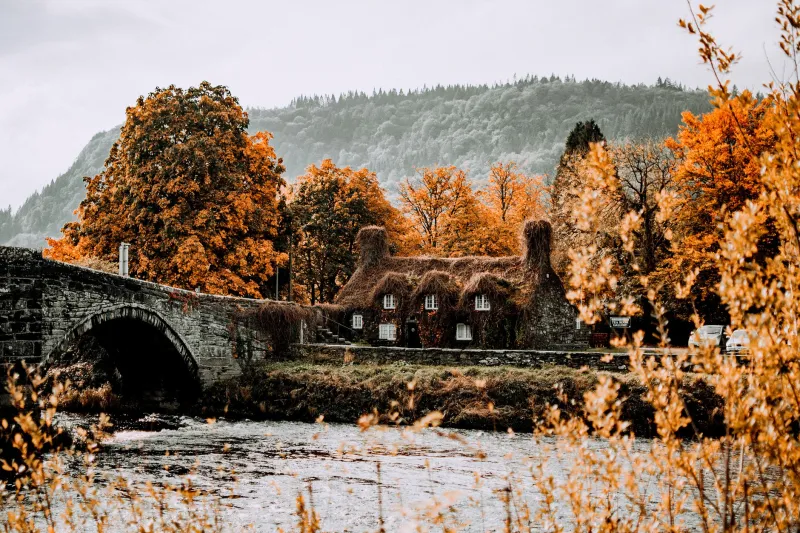
This is the sort of stone cottage that seems to have grown out of its hedge rather than been built beside it. Arrival is via a key safe by the boot room, with the code sent a day or two ahead. Inside, the note is handwritten and brief: heating already on, logs by the stove, milk in the fridge, pub up the lane if you need it.
What makes it work is the lack of theatre. You can roll in at nine on a Friday, unpack in the dark, and be asleep before you have properly looked at the view. In the morning it is all there waiting: hills, a proper coffee pot, and no one asking whether you slept well. Midweek, the same system means you can arrive after a slow drive and not feel you are keeping anyone from their supper.
Cwm Barn, below Hay Bluff
A converted barn with a neat line in quiet efficiency. The arrival details land by email before you set off, including the key safe location, the parking spot, and a simple map to the footpath at the top of the field. The welcome note is on the kitchen table, weighted down with a jar of local honey. The kettle is filled. The torch is on the hook.
It suits a Friday night arrival when you want the weekend to begin the moment you turn off the engine. No small talk, no tour of the boiler, no standing in a hallway making pleasantries about the weather. Just the code, the door, and the particular satisfaction of putting your bag down in a room that is already warm.
The Old Reading Room, Capel-y-ffin
Small, bookish and deliberately low-key. The key is in a lockbox beside the porch, and the note inside begins with the only instruction that really matters: put the kettle on. The woodburner is laid. There is a flask of milk in the fridge and a short list of walks that start from the door.
It is a good choice for a solo traveller or a couple who want a midweek escape without the performance of arrival. The lane is narrow, the signal is patchy, and the silence is the point. You are not checking in. You are simply turning up, which is a different and much better thing.
What to check before you book
Self check-in is only relaxing when the details are clear. Before you commit, look for the small print that makes a late arrival smooth rather than stressful.
- When the code is valid. Some key safes work from 4pm, others from 6pm. If you are arriving late, confirm the code will be active when you get there.
- Where the key safe is. A photograph helps. So does a what3words location if the lane is unlit and the postcode sends you to a field.
- Signal and directions. Download the map before you leave. Rural borders lanes are not the place to discover you have no bars and no idea which gate is yours.
- What is provided. Check whether milk, tea, coffee, logs and towels are included. A filled kettle is lovely; a filled kettle with no tea bags is a tease.
- Who to call if the code fails. Good self check-in still has a human at the end of a phone. Make sure you have a number, not just an email address.
- Departure instructions. Some places ask you to strip beds, empty bins or leave the key in a box. Know what is expected before you leave, not as you are trying to catch a train home.
The pleasure of a silent arrival
A weekend in the borders should not begin with admin. It should begin with the sound of the key in the door, the click of the latch, and the particular hush of a place that has been left ready for you. The kettle is filled. The note is on the table. Nobody needs to know you have arrived.
That, in the end, is the quiet luxury of it. Not a lack of welcome, but a welcome that has already been made — and is waiting for you to notice it.