Half Past Four and Already Dark: Three Border Hideaways That Lean Into the Night
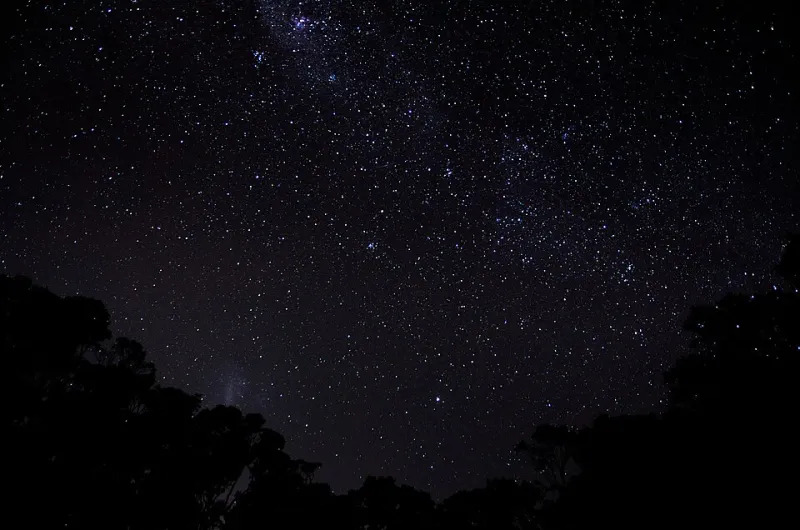
Photo: Chad Ajamian, CC BY 3.0, via Wikimedia Commons
By the middle of December the light has properly gone by twenty past four. By half past, the lane is black, the hill is a shape, and the only thing left to do is look up. That is the quiet trick of a borders winter: the entertainment does not finish at dusk, it begins there.
The Bannau Brycheiniog International Dark Sky Reserve — designated back in 2013 — runs right up to the northern edge of Hay. Step a few hundred yards off the town's streets and the Milky Way stops being something in a photograph and becomes something you have to squint at. On a clear night in November or December you can see it from a garden gate, provided nobody has left a security light on.
That is the catch. Not every holiday cottage is built for the dark. A floodlight on a barn wall can wipe out half the sky. A patio strung with warm-white bulbs is lovely at seven and ruinous at ten. The three places below have gone the other way: shielded lamps, low-level timers, and a bench in a spot somebody actually thought about. If you are booking a slow weekend this winter, these are the ones that treat the ceiling as part of the offer.
Cae Mawr, above Llanthony
A long stone house at the end of a track, with thick walls and a garden that is essentially a flat shelf of grass looking south-east over the valley. The outside lighting runs to a shielded porch lamp and two low bollards on a timer. Nothing else. The owner leaves a red-filter torch by the door and a printed star chart on the dresser, which tells you most of what you need to know about the place.
The bench is the point. It sits at the garden's far edge, facing the gap in the hills, and at ten o'clock in December you are looking at Orion before you have finished your tea. There is no passing traffic, no neighbouring window, no reason for anyone to switch anything on. Bring a blanket for your knees and something hot in a flask.
The Wain House, Dorstone
Timber and stone tucked into an old orchard, ten minutes from Hay and considerably further from any streetlamp. The exterior lights here are passive infrared and set low — ankle height, so they pick out the step rather than the sky. Once you are standing still at the top of the orchard, everything clicks off and the dark comes back within a minute or two.
That top bench is where you want to be. On a good night the stars over the Golden Valley are dense enough that you lose track of the constellations and start making up your own. The kitchen window is the only light you might see, and only if you have left it on. Leave it off.
Bwlch Cottage, near Talgarth
Small, two-up two-down, on the edge of the common. The garden is a bank rather than a lawn, and the lighting is on a timer that clicks off at half nine — earlier than you might like, which is exactly the idea. The bench is honestly a plank on two stones, and it is the best seat of the three.
This is the darkest of the gardens, and the one where you are most likely to see something you cannot immediately name. It is also the one where you will be glad of the second pair of socks. Sit for twenty minutes and your eyes adjust properly; the sky gets busier the longer you stay out.
Read the moon before you book
A full moon over the Black Mountains is not nothing. It turns the fields silver and lets you walk a lane without a torch at all. It also flattens the Milky Way into a smudge and makes the sky about a third as interesting. If stars are the point of the trip, aim for the week around a new moon. If you would rather walk at night and not think about your footing, a first-quarter moon is a decent compromise: bright enough to see by, dark enough after midnight.
Moon calendars are free, accurate and take about thirty seconds to check. Do it before you pay a deposit rather than after. Cloud is the other variable, and no calendar helps with that — a two-night booking gives you a spare chance.
Pack like you mean it
A red torch, because red light preserves your night vision and does not ruin everyone else's. A flask, because a bench at ten o'clock is a cold place to be without one. A second pair of socks, because the grass is wet until roughly March. A wool hat, gloves, and something to sit on that is not bare wood. Binoculars if you own them and can be bothered to carry them. Leave the white headtorch at home, or tape over the lens.
One more thing: turn your phone brightness right down before you go outside, or you will spend five minutes re-adjusting to the dark while the sky waits patiently.
The hour between sunset and supper
Do not waste the dark on the sofa. A thirty- or forty-minute walk before you eat is the whole ritual: out at half four, back by quarter past five, supper on by six. The lane up from Cusop onto the common is wide, quiet and stile-free. The Wye Valley Walk downstream from Hay towards Clifford is easy underfoot and good in low light. The churchyard at Dorstone and the lane behind it make a short, pleasant loop. The abbey ruins at Llanthony are atmospheric but uneven — take the torch and go slowly.
Stick to lanes and known paths rather than striking out across open hill. The ground is wet, the ditches are real, and the last thing anyone wants is a rescue on a Tuesday. Tell someone which lane you have taken, take the red torch, and be back before the soup goes cold.
The best border hideaways this winter will not be the ones with the biggest telly. They will be the ones where somebody thought about where the light falls, put a bench in the right place, and left you a flask. The ceiling does the rest.