Apples, Thick Walls and Nowhere to Be: Three Cider-House Retreats in the Welsh Borders
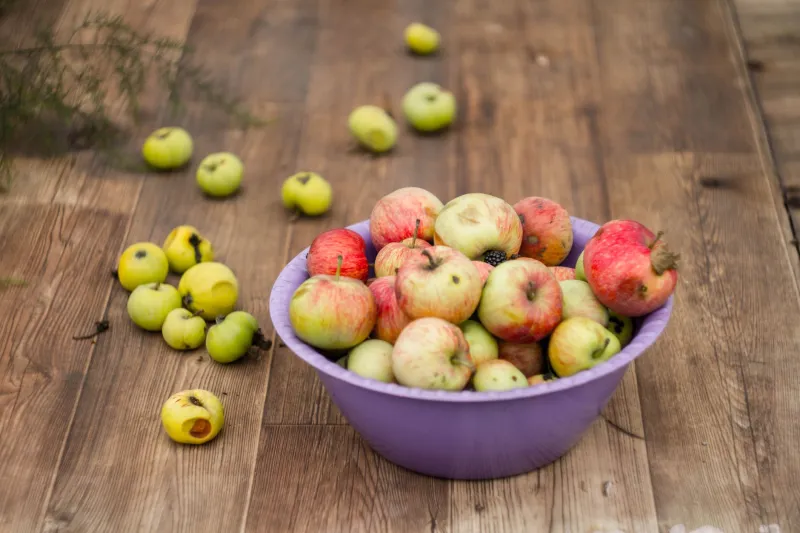
There is a particular kind of quiet that settles around an old cider press. It is not the silence of an empty room so much as the silence of a job finished. The stones have been scrubbed, the barrels rolled away, the apples long since turned to something golden. What remains is thick wall, low beam and the sense that the building has already done its most urgent work. For a weekend in the Welsh borders, that is a very good starting point.
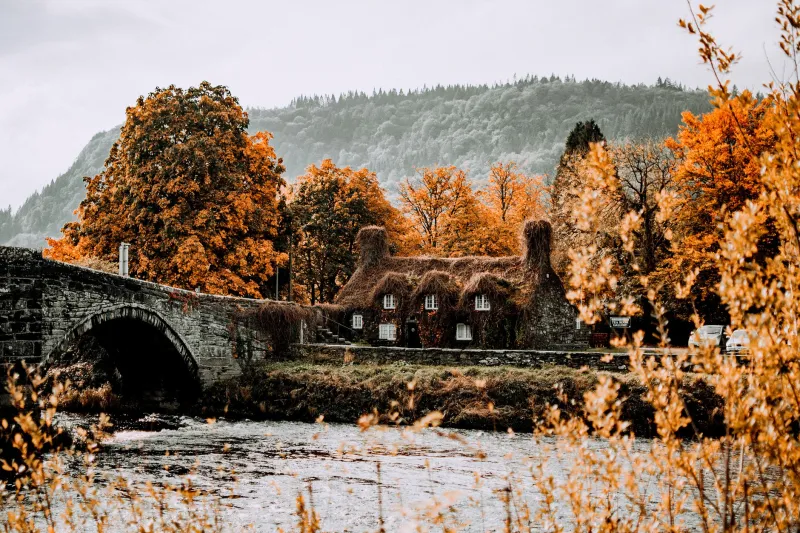
Cider houses and press rooms are not grand. They were built for practical things: storing fruit, keeping cool, making use of a slope. But that practicality is exactly what makes them restful now. You get walls that hold the warmth of a fire, windows set deep enough to make a window seat feel like a small room of its own, and a floor plan that rarely hurries you from one place to another. Add an orchard outside, a bottle from a nearby maker on the table, and a dark lane with no streetlight for miles, and you have the makings of a slow border weekend.
The appeal of the old press room
A converted cider house is not a hotel with a theme. The best ones wear their history lightly. You might find the original press beam left in place, a stone trough now doing duty as a boot tray, or a line of old cider jars on a shelf. None of it feels staged if the owners have resisted the urge to over-explain. The pleasure is in the proportions: ceilings low enough to make lamplight pool, rooms square enough to hold a deep chair, doors that close with a proper thunk.
This is the sort of stay that suits November especially well. The orchard is bare-branched, the lanes are muddy at the edges, and the light goes early. But that only makes the inside feel more generous. You arrive in the last of the afternoon, put the kettle on, and watch the garden go blue. Later, there is a fire and a bottle and nowhere to be. The building has seen hundreds of autumns like it. It is not going to fuss.
Three stays worth slowing down for
The first is The Old Press at Brilley, tucked into a fold of Herefordshire just west of Hay. It is a former cider house attached to a long stone barn, with one generous living room and two bedrooms that feel like they have been there forever. The orchard behind the house is older than anyone can quite agree on, and a footpath from the gate drops down to a lane that leads, eventually, to a pub with a low ceiling and a sensible attitude to dogs. In November, the garden is mostly twigs and birdsong, which is no bad thing. The owners leave a bottle of local cider on the table and a hand-drawn map of a two-mile loop that takes in an apple tree or two and a view across to the Black Mountains.
Then there is Perry Barn near Dorstone, a smaller affair: a press room turned one-bedroom hideaway with a woodburner in the corner and a window that looks straight down an orchard row. It is the kind of place that makes a single night feel illicitly long. The bed is high, the bath is deep, and the kitchen is small but perfectly capable of a supper of bread, cheese and something from the deli in Hay. The lane outside is narrow and quiet, and the nearest neighbour is a field. If you want to walk, there is a network of footpaths that fan out towards the Golden Valley; if you don't, there is a bench in the orchard and a blanket in the chest.
Third is The Apple Loft at Llanigon, just over the border on the Welsh side. This one is the most elevated of the three, both literally and in spirit: a first-floor loft in a stone cider house with a balcony that catches the last of the sun. The press mechanism is long gone, but the room retains its old apple-store cool, which means the underfloor heating has to work a little harder and does so very pleasantly. It is a good base for a longer walk — up onto the common, perhaps, or along the lanes towards Capel-y-ffin — but it is equally good for doing very little. The owners keep a small honesty shelf of local cider and perry, and the guest book is full of people who came for two nights and wished they had booked three.
A weekend that asks little of you
The rhythm of a cider-house weekend is not complicated. Arrive before dark if you can, so the lane and the orchard are still legible. Unpack only what you need. Put something simple on the table: a loaf, a wedge of cheese, a bottle from a maker you have never tried. If the weather is kind, walk out into the trees for half an hour, just to see the shape of the place. If it isn't, light the fire and let the afternoon go.
The following morning, there is no rush. Cider houses tend to be attached to working farms or old orchards, which means the sounds are early but gentle: a gate, a dog, a tractor somewhere out of sight. Make coffee. Read a page of something. Then take the longer walk you were too tired for the night before. In this corner of the borders, the footpaths are plentiful and mostly empty. You can loop from Brilley up towards the common, or from Dorstone along the valley, or from Llanigon up onto the hill with the wind at your back. None of it requires a map on your phone. A folded leaflet from the kitchen drawer will do.
A bottle, not a bucket list
It would be easy to turn cider into a tasting itinerary — three makers before lunch, a flight of perries after — but that is not really the point. The pleasure is in the single bottle, chosen without ceremony, opened when the fire is going. Herefordshire and the Welsh borders have no shortage of small makers, and many of them sell direct from the farm or through the odd village shop. Ask the owner of your stay; they will know who is pressing this week and who has a few bottles left from last year. The best cider for a weekend like this is not the rarest one. It is the one you drink slowly, in a room that smells faintly of woodsmoke and old apples.
After dark, the walls do the work
One of the quiet advantages of an old press room is that it does not need much from you after sunset. The walls are thick, the windows small, the lighting low. There is no view to chase and no terrace to make the most of. You are simply inside, and inside is enough. Put on another log. Find a deck of cards. Let the conversation go where it goes. The lane outside will be dark by five, and the orchard will be a shape rather than a detail. Somewhere beyond it, the border runs through fields you cannot see.
That is the particular gift of these stays: they make the evening feel longer than it is. You do not have to go out to find atmosphere. It is already there, in the stone and the beam and the smell of the fire. The press is still. The apples are done. The weekend has nothing urgent to ask of you.