The Gatekeeper's Weekend: Staying in Old Toll Houses Around Hay-on-Wye
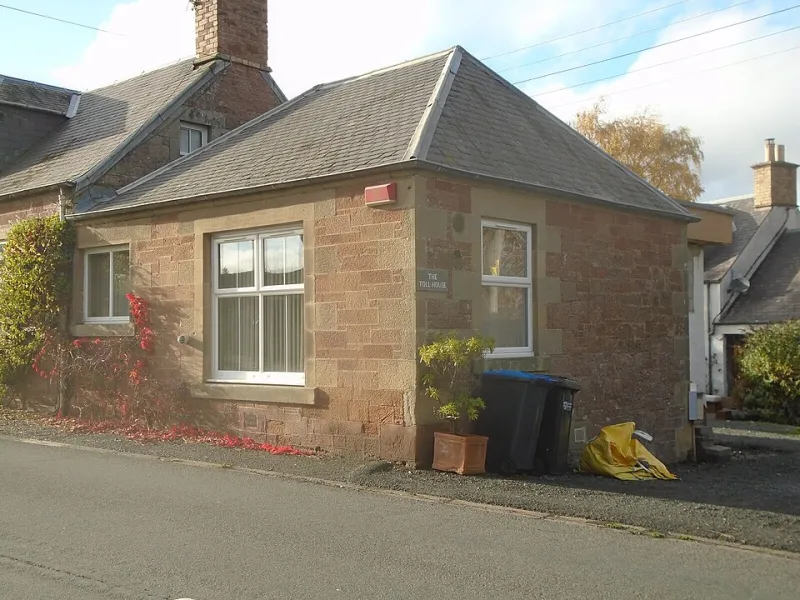
Photo: Chris Minto, CC BY-SA 2.0, via Wikimedia Commons
Toll houses were built to make you stop. A window at the height of a cart, a hand out, a barrier down, and a charge for the privilege of carrying on. The turnpike trusts that ran the roads around Hay-on-Wye were wound up long before anyone reading this was born, but their cottages remain — tucked into junctions, angled to watch two directions at once, built with walls thick enough to lean a whole weekend against.
Staying in one is a small joke at history's expense. You arrive, you stop, and nobody asks you for anything except that you close the gate behind you. The rooms are odd-shaped because the buildings were shaped by the road rather than the other way round. The windows are watchful. And the lanes outside, which once carried drovers, mail coaches and coal, now carry boots, wet dogs and the occasional lost cyclist.
The Old Toll House, Clyro — a window on two roads
Just outside Hay, at Clyro, the road to Builth splits from the road to Hay, and the toll house sits on the wedge between them. The old toll window has been glazed and turned into a seat wide enough for one and a half people, which is the correct size for a reading chair. The walls are rubble stone, a good eighteen inches of it, so the place holds heat like a thermos and holds silence even better.
Inside it is pleasantly lopsided: a sitting room with a woodburner, a low doorway that will catch you out once and only once, two bedrooms tucked under the eaves. No television, though the wifi behaves if you stand near the router and ask nicely. The cottage was extended by need rather than design, and you can feel the joins in the floor.
Out of the door, Hay is a twenty-minute walk over the Wye bridge — bookshops, coffee, a pint, back before dark. Or take the lane climbing towards Painscastle for a longer loop with the Black Mountains sitting on your shoulder the whole way. The Baskerville Arms in Clyro keeps a fire and does food; check the hours before you commit, because country pubs keep country time.
Whitney Toll Cottage — the bridge that still charges
A few miles east of Hay on the A438, the road crosses the Wye at Whitney on one of the last privately owned toll bridges in the country, and the cottage stands beside it. You hear the bridge before you see it: the planky rumble of tyres, the clunk of the barrier, the small change of a charge that has never quite gone away. It is a lovely thing to fall asleep to, in the way that other people's mild inconvenience is lovely when you are not in the car.
Inside, the building is all low beams and small windows, the river light doing most of the decorating. There is a snug with two armchairs and a stove, and a kitchen table that is clearly the centre of gravity. It sleeps four, but two is the honest number — four would be a negotiation.
The Wye Valley Walk runs past the door, and the stretch from Whitney into Hay is a flat, unhurried few miles of river, kingfishers if you are lucky and mud if you are not. Cross the bridge on foot for the pleasure of paying nothing, and read the old toll board on the wall: a horse and cart once cost more to cross than a car does now.
The Turnpike Gate, Presteigne — where the town begins
Presteigne, over the border in Powys, was the old county town of Radnorshire, and the turnpike road came into it from the east. The gate house here is taller than the other two — two storeys, gable end to the road, the line of the old toll bar still legible in the wall. You get a narrow hall, a proper kitchen and a sitting room with a window that looks straight down the road you arrived on, which is either comforting or unnerving depending on how much you want to be found.
Walk into town for the Judge's Lodging museum, the second-hand bookshop and the butcher; or head west on the lanes towards Kinsham and the Lugg valley, where the road forgets to be straight and the hedges close in. This is walking that rewards a late start and a pocket full of nothing.
Reading the lanes
Toll roads left a particular landscape behind them: straighter stretches, milestones, the odd toll board still bolted to a wall. Pick up OS Explorer OL13 for the Hay and Black Mountains side, and Explorer 201 for Knighton and Presteigne. The lanes between them are quiet, narrow and frequently wet. Take a torch, take boots, take a paper map you can unfold in the rain without swearing.
The practical toll
- Booking: these are small places. Two is the natural number. Some take dogs — ask first, don't assume.
- Signal: thick walls do what thick walls do. Download your map and your podcast before you arrive.
- Arrival: many are self check-in, and the old toll window is often where the key safe hides. There is a certain poetry in that.
- Food: eat in Hay or Presteigne, or book a table at the village pub. Nobody delivers out here.
- Lighting: the lanes have no street lights. In November, a torch is not optional; it is the whole point.
The toll is time now. You pay it at the door — in a slow cup of tea, a fire lit early, a walk that takes twice as long as the map says — and you get the weekend back in return. The gatekeeper would approve.